One of the simplest, cheapest health interventions there is — a habit the Foundation has been teaching, step by step, since 2014.
Handwashing with soap is one of the simplest and most effective ways of maintaining personal hygiene and reducing the spread of many infectious diseases. Hands can easily come into contact with germs from people, surfaces, food, and contaminated materials. Without proper handwashing, these germs can enter the body and contribute to illnesses, particularly among children.
Global Handwashing Day provides an opportunity to promote awareness about the importance of washing hands with soap and to encourage healthy hygiene habits among children, families, schools, and communities. The campaign emphasizes that handwashing should become a regular part of everyday life, particularly before eating or preparing food and after using the toilet.
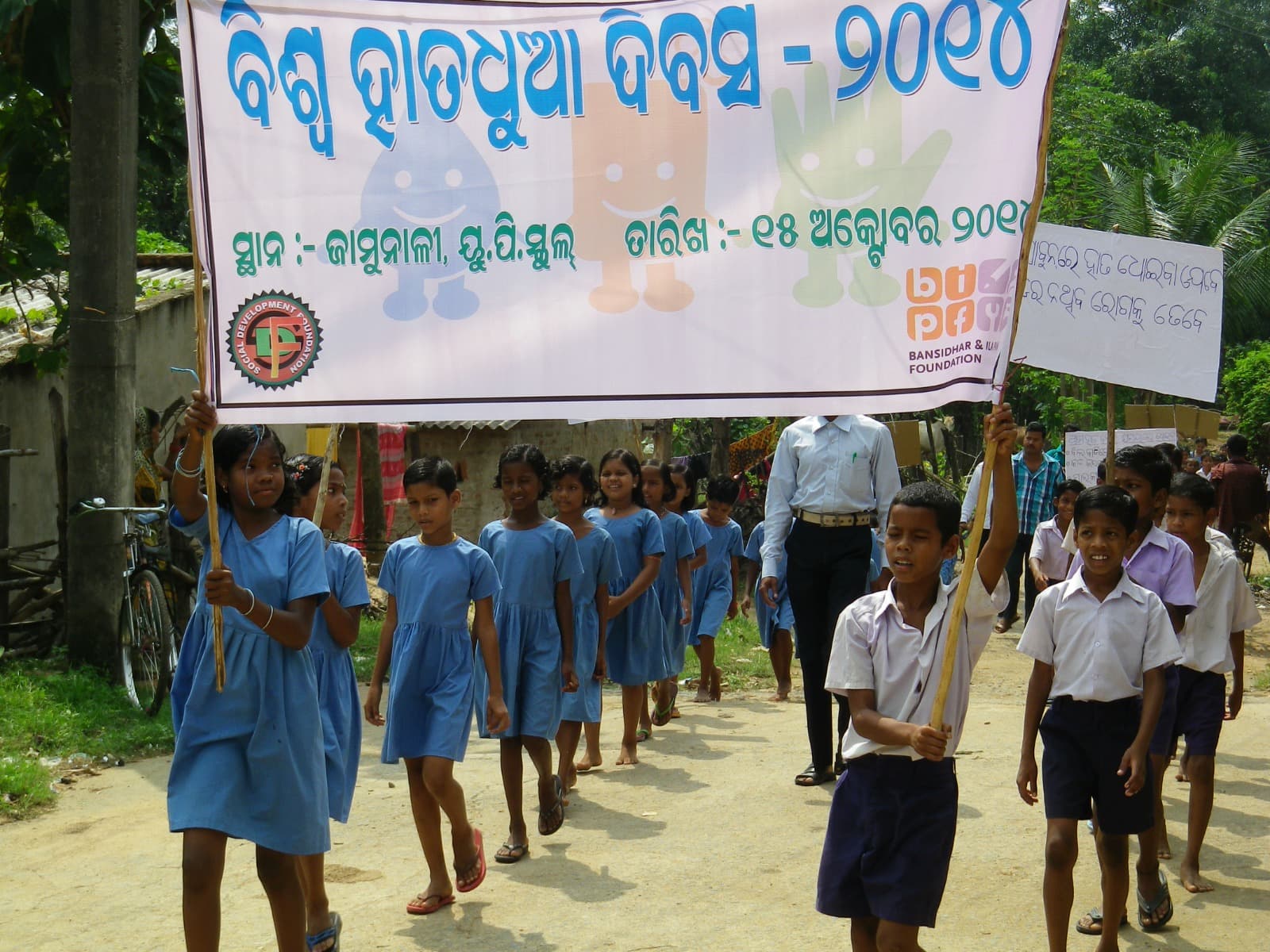
The Foundation organized a workshop on Global Handwashing Day in collaboration with the Bansidhar and Ila Panda Foundation at Jamunali U.P. School on 15 October 2014. The programme was attended by representatives including the Block Medical Officer, ASHA workers, Anganwadi Workers (AWWs), and PRI members from the operational villages. The programme focused on demonstrating proper handwashing techniques and creating awareness about the role of hand hygiene in preventing the spread of infections.
Key Messages on Proper Handwashing
Participants were encouraged to follow these basic steps:
- 1Wet your hands thoroughly with clean, preferably warm, water.
- 2Apply an adequate amount of soap to cover all parts of the hands.
- 3Rub your hands together thoroughly for at least 20 seconds, including the palms, backs of the hands, between the fingers, and around the nails.
- 4Rinse your hands properly with clean running water.
- 5Dry your hands completely using a clean towel or allow them to air-dry.
The Foundation continues to promote safe sanitation and proper hand hygiene as important steps toward healthier, cleaner, and more resilient communities.