
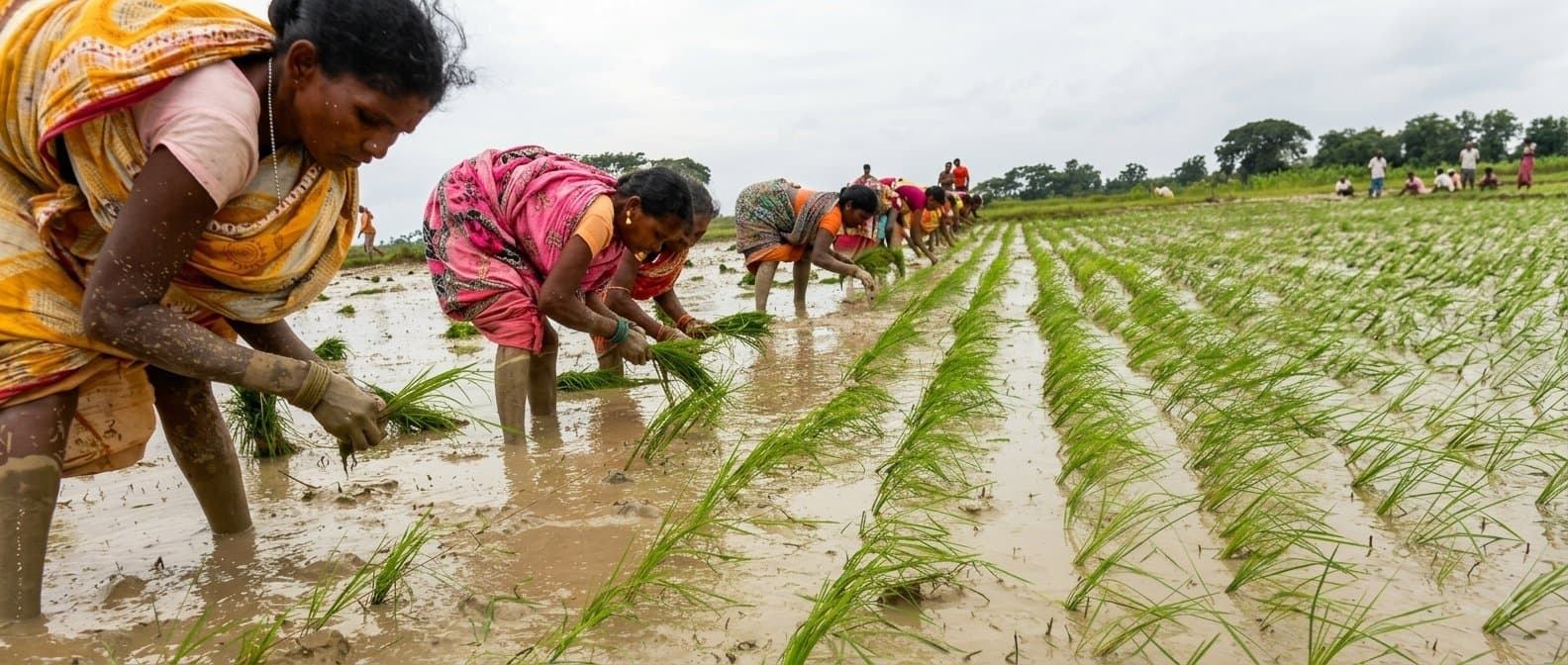
Farmers teaching farmers — the oldest extension method in the book is still one of the most effective.
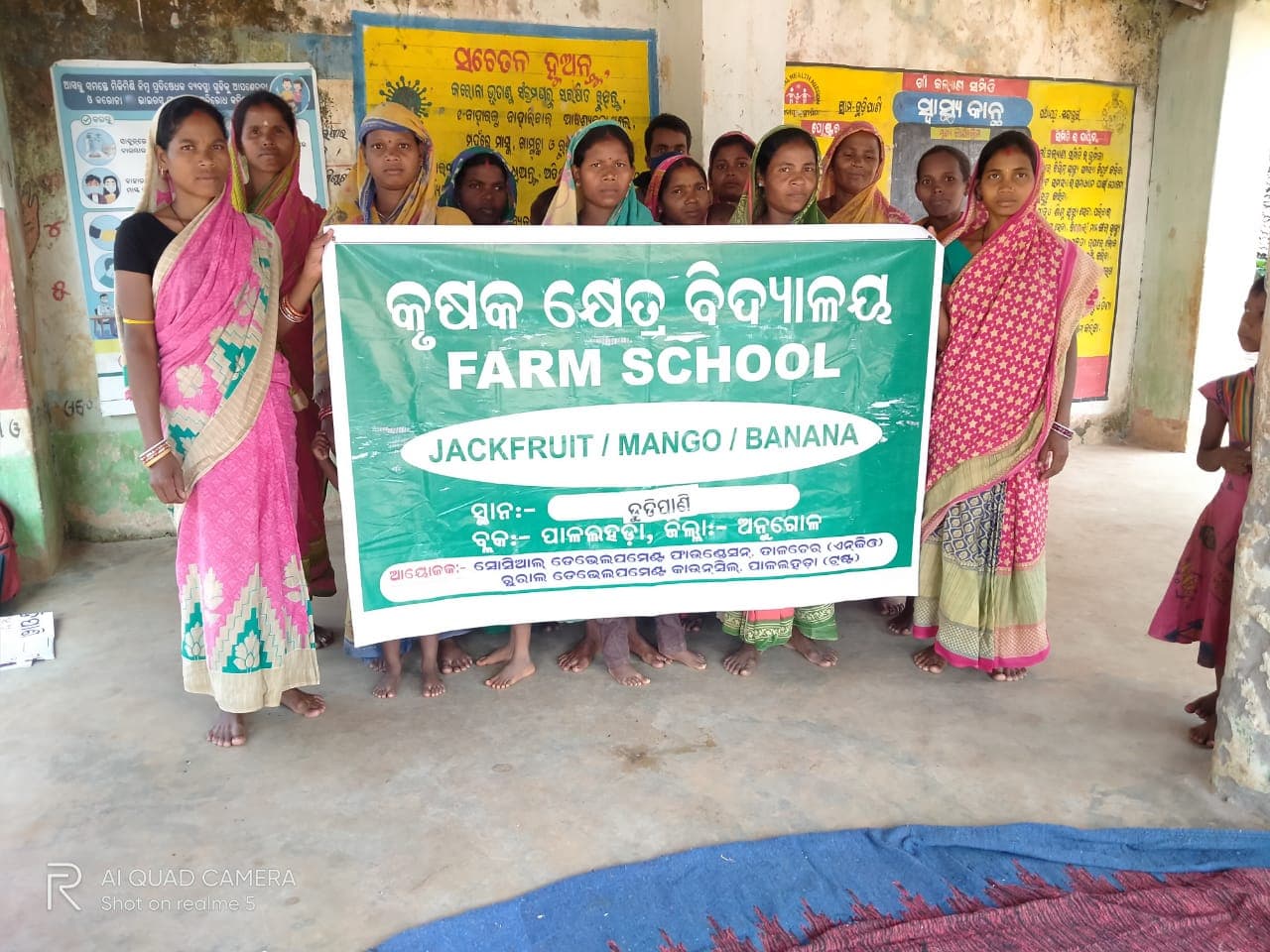
Farm School session, Sakosinga, Banarpal Block
The Farm School initiative promotes farmer-to-farmer extension as an effective approach for transferring agricultural knowledge, technologies, and practical experience at the village level. The concept is based on the understanding that farmers often learn more effectively from other farmers who have successfully adopted a particular practice under similar agro-climatic and socio-economic conditions.
The initiative is being implemented at the farm and village level in Banarpal Block of Angul district. It complements the efforts of the agriculture and allied departments by creating a local platform where farmers can observe, discuss, and learn improved agricultural and livelihood practices through practical experience.
Importance of Farmer-to-Farmer Extension
Farmer-to-farmer learning has several advantages:
- 1Communication takes place in a familiar local language and context.
- 2Farmers can freely discuss practical problems and possible solutions.
- 3Demonstrated success by fellow farmers increases confidence in adopting new practices.
- 4Farmers can observe techniques directly under local field conditions.
- 5Knowledge can be exchanged conveniently within the village.
- 6Similar agro-ecological and socio-economic conditions make the practices easier to understand and replicate.
- 7Regular interaction among farmers strengthens local knowledge-sharing networks.
The functioning of the Farm School is monitored and supported by Social Development Foundation. Technical resource persons and external trainers may be invited from institutions such as Krishi Vigyan Kendra (KVK), Angul, the Agriculture and allied departments, and other relevant organisations whenever specialised guidance is required.
The Farm School initiative is being supported through collaboration and convergence among Social Development Foundation, NABARD, KVK, and ATMA, Angul. The approach combines local farmer knowledge with technical expertise to promote practical and sustainable agricultural development.
Farm School Details
| Sl. No. | Farm School | Village | Block | Farmer Teacher | Enterprise/Commodity |
|---|---|---|---|---|---|
| 1 | Farm School Sakosinga | Sakosinga | Banarpal | Mrs. Annapurna Nanda | Mushroom Cultivation |
Through the Farm School approach, successful farmers are encouraged to act as local resource persons and demonstrate viable practices to other community members. This helps strengthen peer learning, improve technology adoption, and promote sustainable livelihood opportunities at the grassroots level.
A Closer Look
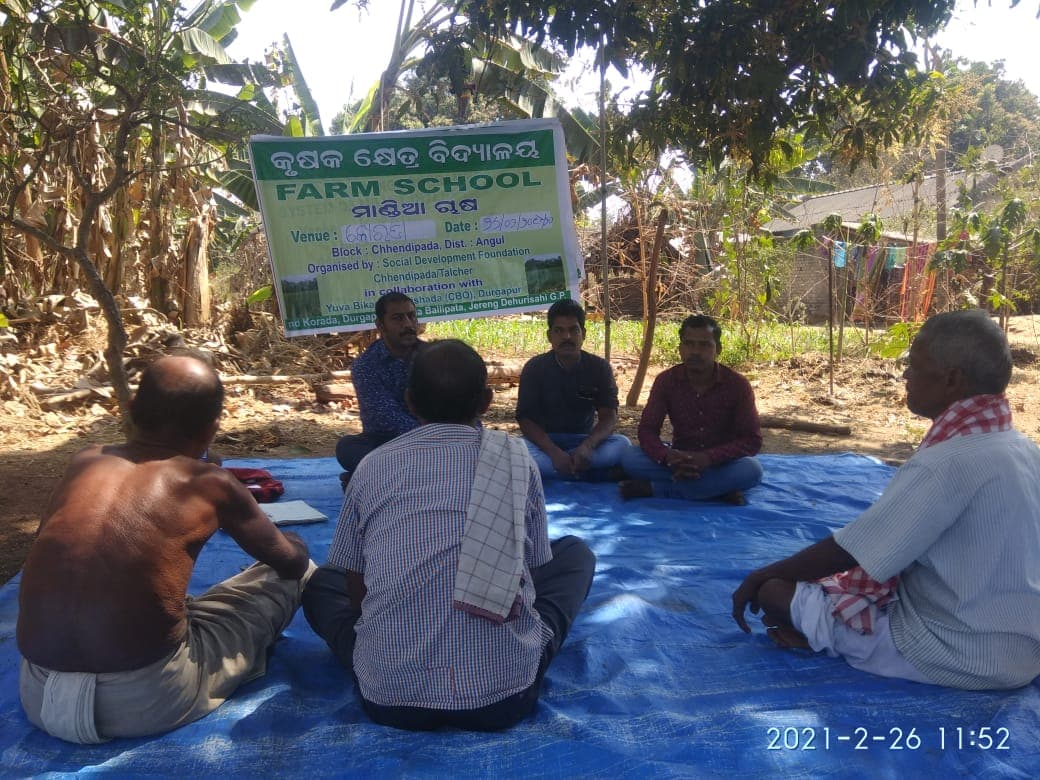
Farm School session, Sakosinga
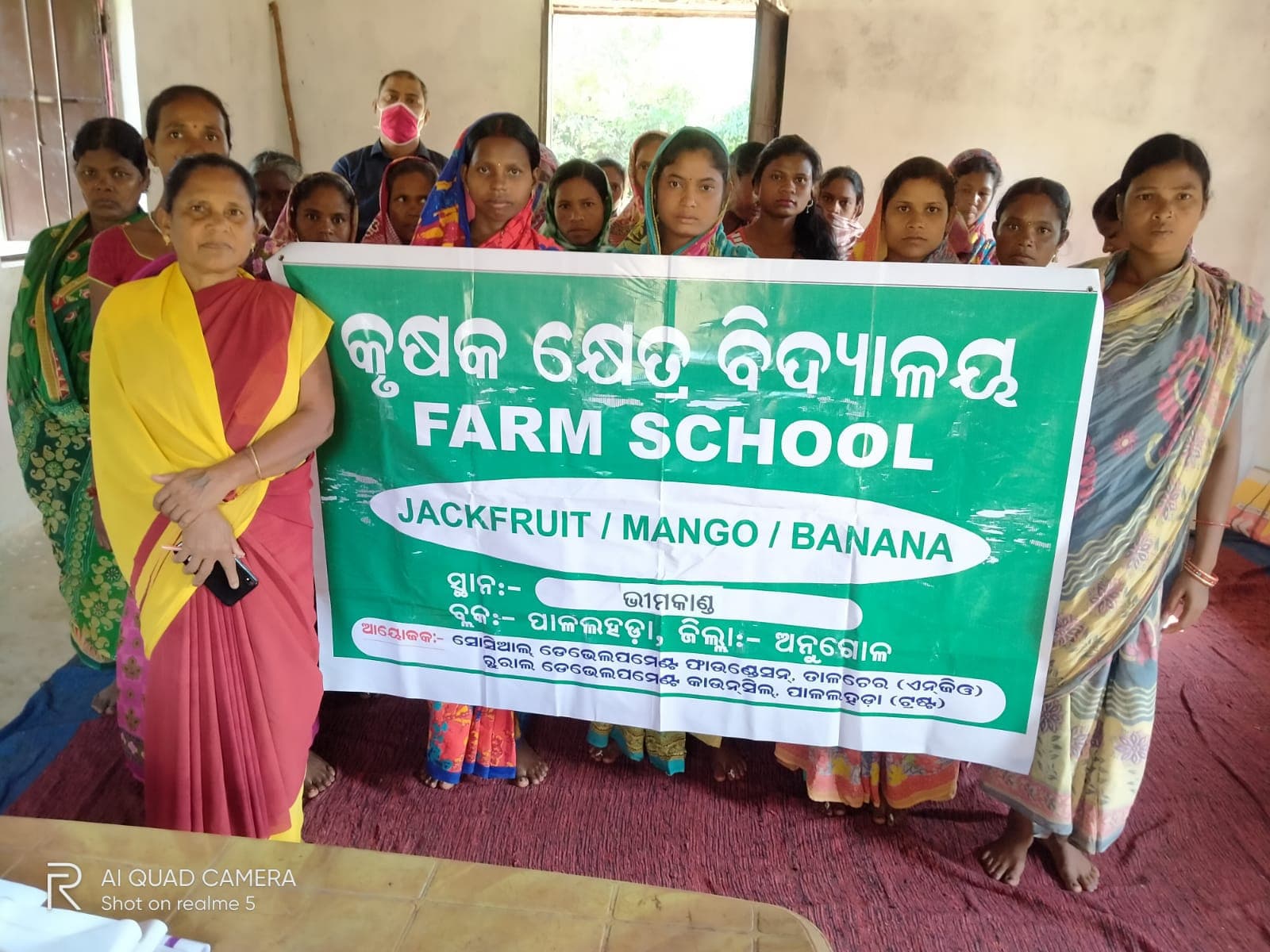
Farm School session, Sakosinga