Elementary education as a fundamental right, not a favour — and the community work it takes to make that real in practice.
Education is a fundamental driver of social and community development. Limited literacy and inadequate access to quality elementary education continue to create barriers to the social and economic advancement of disadvantaged rural communities. Recognizing this, Social Development Foundation (SDF) has consistently worked to promote access to education and strengthen community participation in the education system, including awareness of the Right to Education (RTE).
The Right of Children to Free and Compulsory Education Act, 2009 (RTE Act) provides for free and compulsory elementary education for children in the 6–14 age group, establishing elementary education as a fundamental right under Article 21A of the Constitution of India. SDF has worked within its operational areas to create awareness about these provisions and encourage their effective implementation.
Specific Objectives
- 1Create awareness among community members about the importance of education, particularly the education of girls.
- 2Encourage parents to enrol their children in school and support their regular attendance and continued education.
- 3Develop informed and literate community members who can contribute to positive social change.
- 4Strengthen community participation in identifying educational challenges and finding practical solutions.
- 5Promote awareness of children's educational rights and encourage accountability in the delivery of elementary education.
- 6Strengthen the participation of School Management Committees, parents and other community stakeholders in school-related activities.
Community Engagement and RTE Awareness
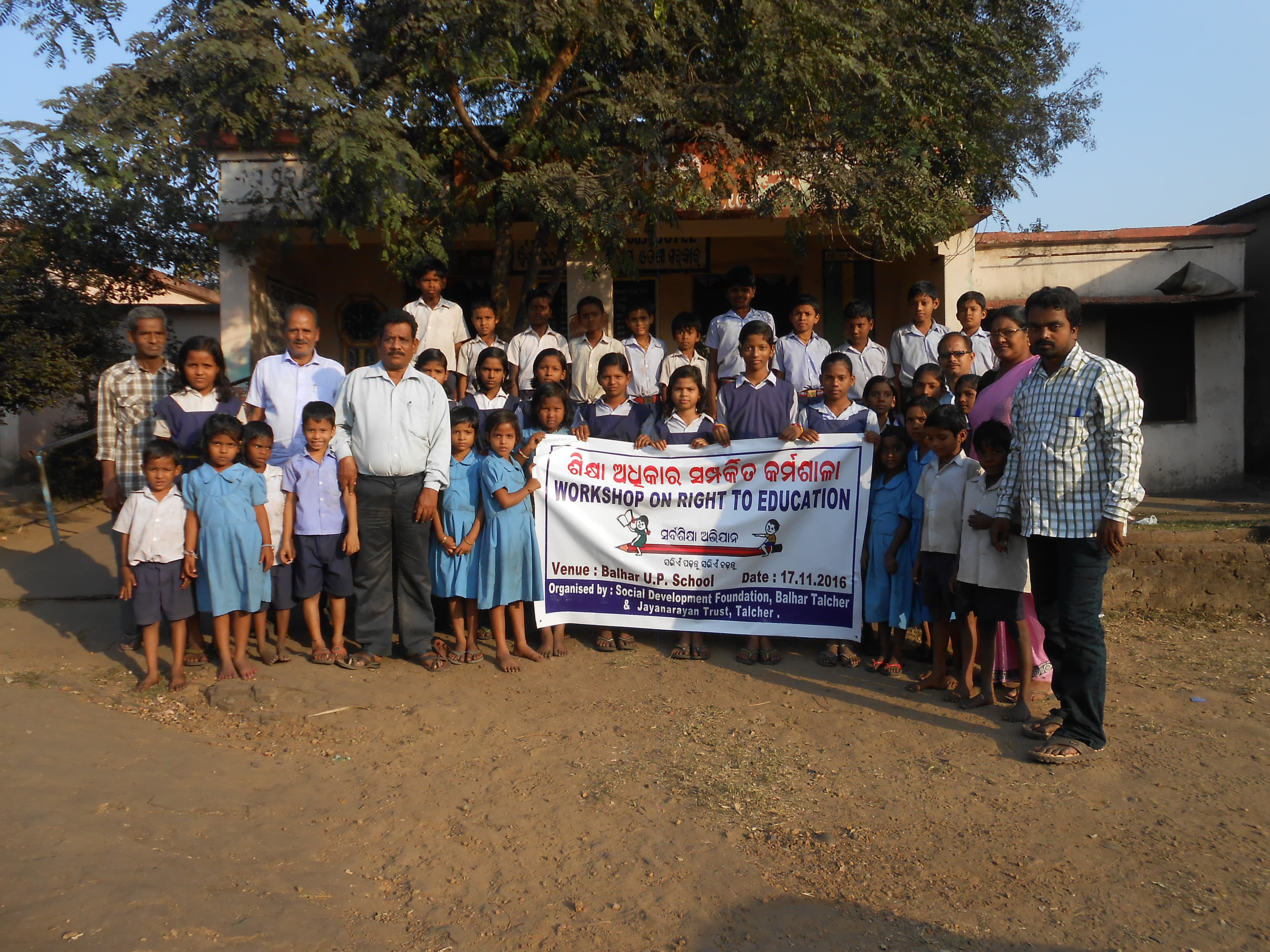
SDF has facilitated regular interaction between parents, teachers and community representatives, supporting School Management Committee (SMC) meetings in schools across Talcher and Kaniha, and conducting awareness and training programmes on the Right to Education in schools in Talcher, Kaniha and Pallahara.
- 1The Right to Education Act and its historical development.
- 2Odisha's rules and progress relating to the implementation of the RTE Act.
- 3The role and responsibilities of School Management Committees.
- 4Teacher recruitment, capacity building and training.
- 5Key challenges and gaps affecting the implementation of the RTE framework in Odisha.
- 6The importance of community participation in improving the quality of education.
International Literacy Day Observance
SDF has used International Literacy Day as an opportunity to promote the importance of education and literacy among children, parents and community stakeholders — involving School Management Committees, Anganwadi Workers (AWWs), Self-Help Group (SHG) members, parents and school communities.
One such programme was organised at Dhumamara Primary School on 8 September 2017, in association with Jayanarayan Trust, Talcher and the School Management Committee. Mrs. Barsha Harpal, District Social Auditor, MGNREGS, DRDA, Balangir, shared her experiences and interacted with the students. SDF has also facilitated several School Management Committee and parent-teacher meetings across Angul, Kaniha, Pallahara, Talcher and Balangir.
Promotion of Girl Child Education and Child Rights
SDF has placed particular emphasis on increasing awareness about girl child education and children's rights, encouraging parents and community members to give equal importance to the education of girls and boys, and to identify barriers that prevent children from accessing or continuing their education.
International Literacy Day Themes
- 1Literacy for the 21st Century
- 2Reading the Past and Reading the Future
- 3Literacy in a Digital World
- 4Literacy and Sustainable Development
Impact and Way Forward
SDF's education initiatives have helped create greater awareness among parents, SHG members, school committees and other community stakeholders regarding the importance of education. Going forward, SDF aims to continue promoting inclusive education, girl child education, child rights, literacy and meaningful community participation in the education system.