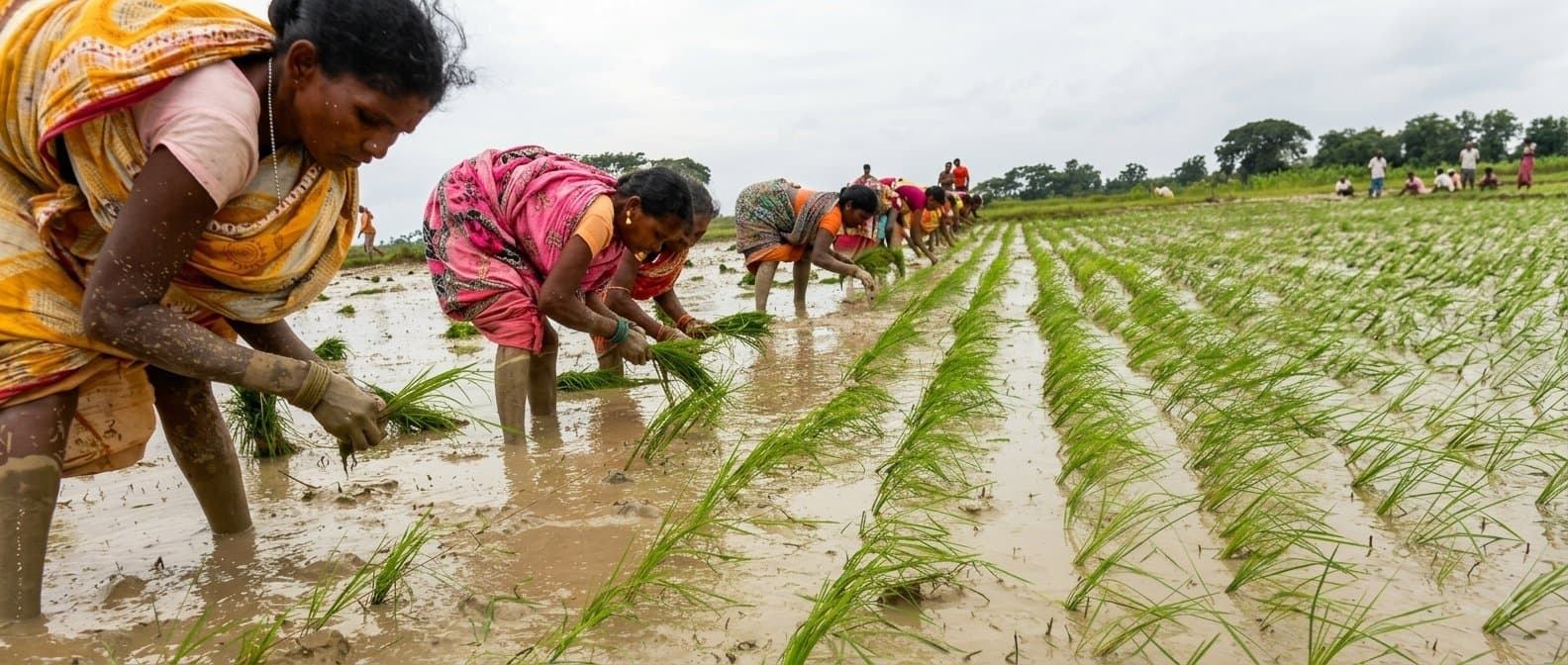
From spore to sale — a low-cost crop that turns a spare room into a small enterprise.
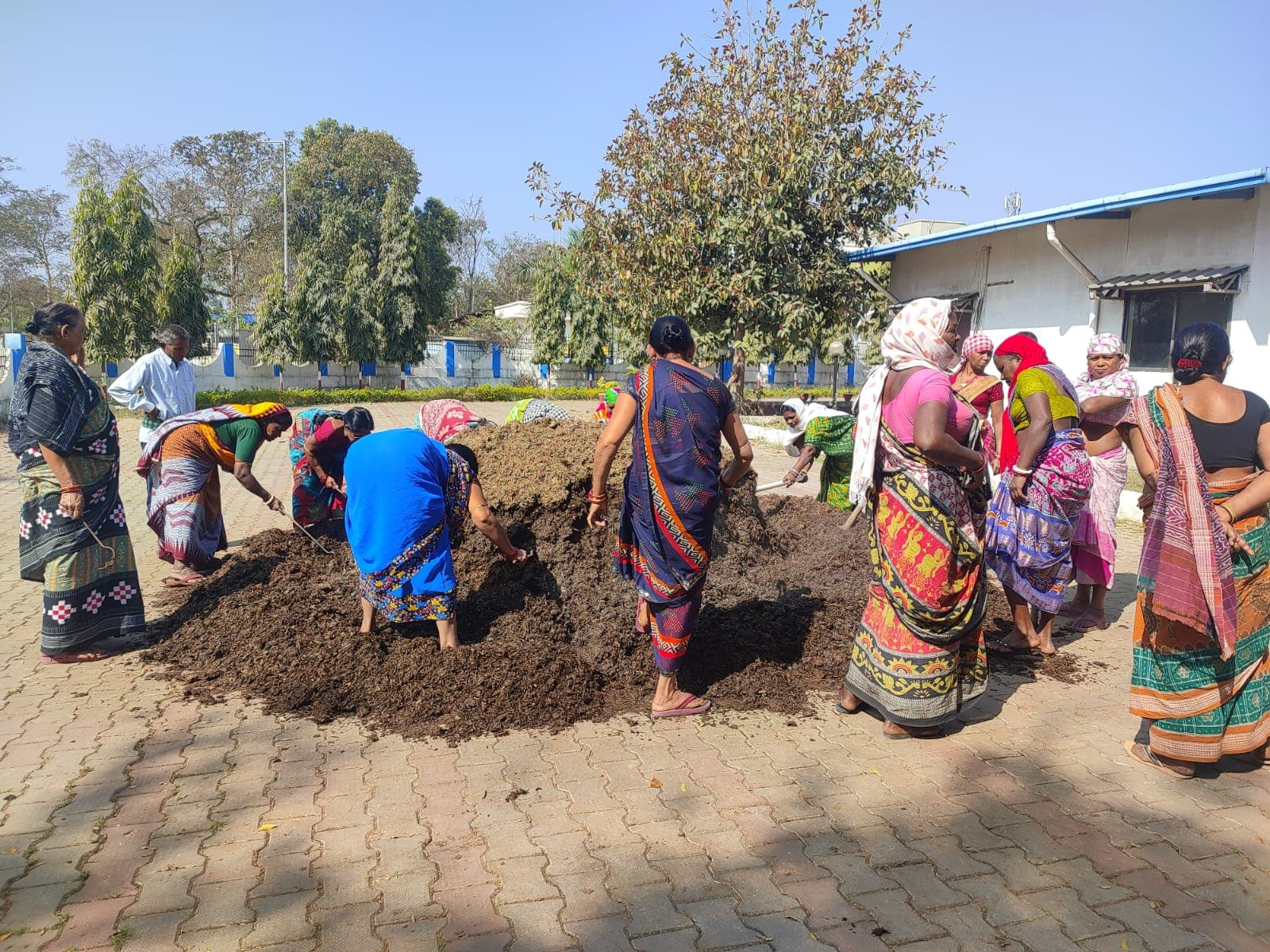
Preparing compost substrate for button mushroom cultivation
Mushroom cultivation has emerged as an important income-generating activity for farmers, women, rural entrepreneurs, and other small-scale producers. Paddy straw mushroom is particularly suitable for tropical and subtropical conditions, while oyster mushroom is also widely cultivated in Odisha. The growing demand for mushrooms in local and urban markets has created opportunities for livelihood diversification and small-scale enterprise development.
Recognising this potential, Social Development Foundation (SDF), Talcher, has been promoting mushroom cultivation in Angul district since 2014. Over the years, SDF has worked in partnership with local government institutions, communities, and corporate organisations to strengthen livelihood opportunities and build the capacities of rural households. Its interventions have included women's empowerment through Self-Help Groups (SHGs) and promotion of sustainable livelihood activities such as mushroom cultivation, fisheries, goat rearing, and duck rearing in Angul and Balangir districts through convergence with government programmes and other development initiatives.
The programme seeks to support poor households and particularly vulnerable communities in strengthening their livelihood and food security. It promotes better utilisation of available natural resources, development of off-farm and non-farm enterprises, community-based management, and access to relevant government schemes and entitlements.
Key Areas Covered under the Mushroom Training Programme
The training programme covered the following areas:
- 1Basic concepts and methods of mushroom cultivation.
- 2Major characteristics and nutritional importance of mushrooms.
- 3Scope and economic significance of mushroom production.
- 4Step-by-step production and cultivation procedures.
- 5Climatic and environmental requirements.
- 6Selection and use of appropriate materials and inputs.
- 7Practical demonstrations of mushroom production techniques.
- 8Basic aspects of post-production handling.
- 9Marketing, market linkages, and value-chain development.
The practical orientation of the programme enabled participants to understand mushroom cultivation as a feasible livelihood activity and encouraged them to consider its potential as a small-scale commercial enterprise.
A Closer Look
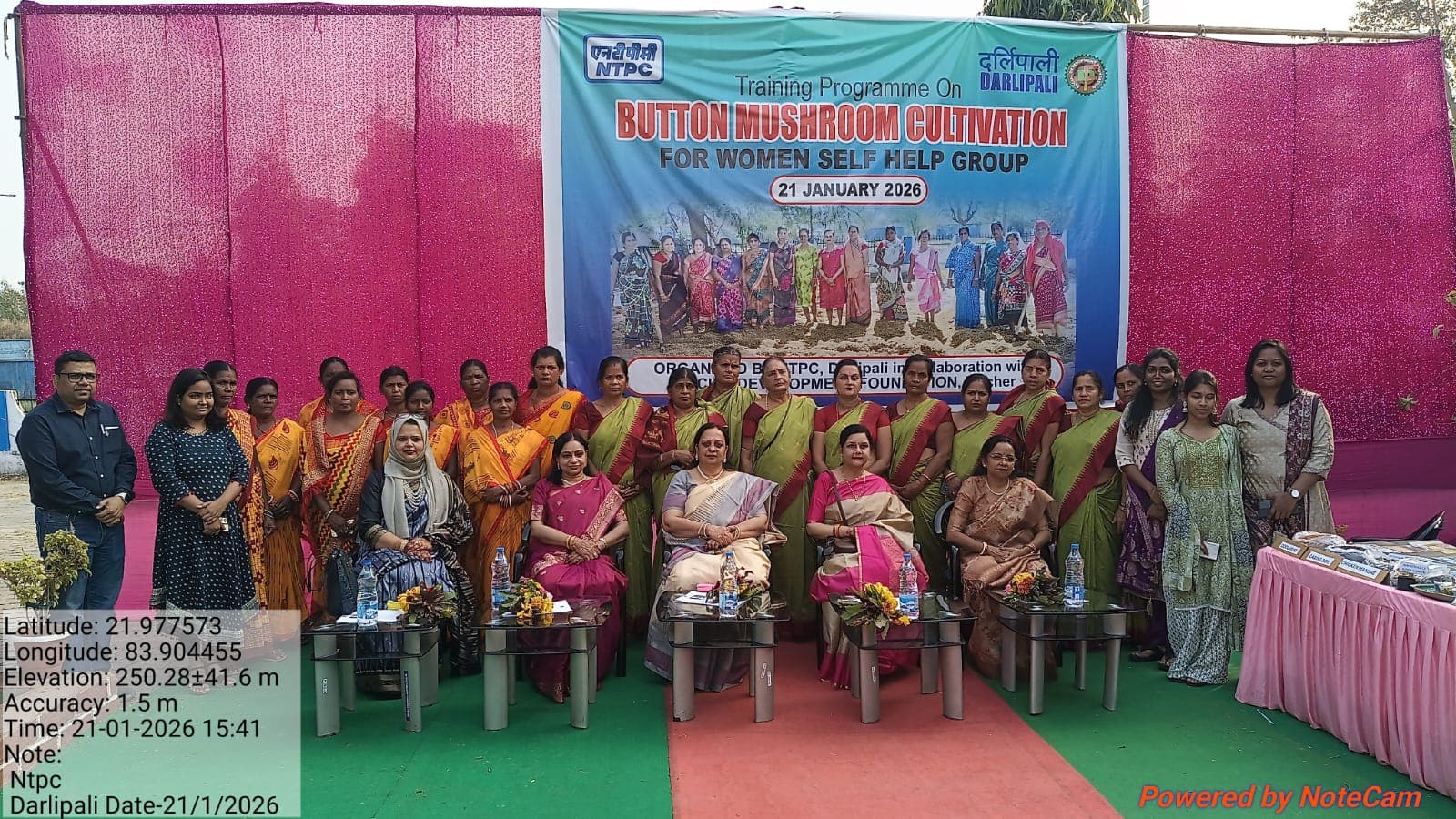
Button mushroom cultivation training